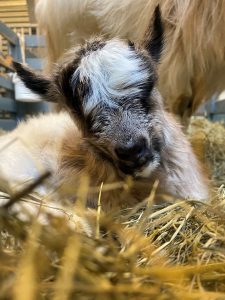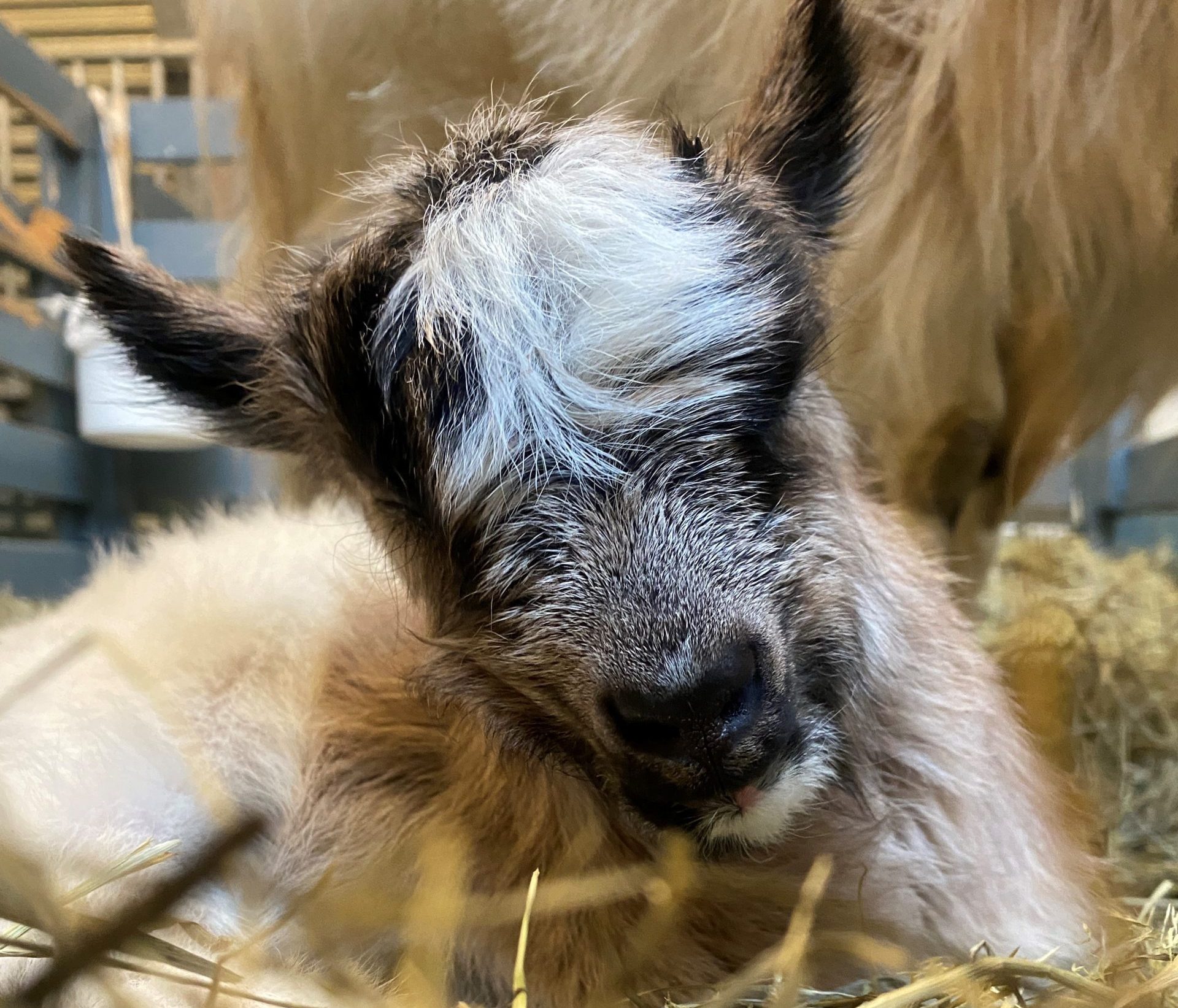
Pens were set up yesterday (17. April) in the indoor goat enclosure and last night the first kid of the spring was born. The mother is called Rák (meaning stripe in Icelandic). She gave birth to a handsome buck. The kids’ father is called Ýmir and he resembles his parents, as they are both the colour “golsuflekkótt”. The staff members at the zoo are eagerly waiting for the birth of more of the spring kids.
Goats are amongst the first domesticated animals and experts believe goats have lived with people for around 10.000 years. The goats that live in Iceland today are descendants of animals that came here with settlers. They have been called the “poor man’s cow”, as they are smaller than cows and do not need as much fodder. The goat population size in Iceland has always been small, although it grew around the turn of the 20th century, and in 1930 the population was around 3.000 animals. At that time Dairy farmer cooperatives were established, and people began to drink more cow’s milk. Afterwards the goat population declined and in 1960 there were only around 100 goats in Iceland. Although in recent years the population has been slowly increasing, and in 2021 there were reportedly 1.672 goats in Iceland.
This increase is most likely due to more awareness about the conservation of the Icelandic goat. From the year 1965 the government has offered a grant for goat farmers for each animal that is taken care of during the winter months. At first, farmers were allowed to have a maximum of 20 goats to receive the grant. They were able to breed for certain characteristics and increase the uses from goats (such as wool). Afterwards there was a rise in the goat population which led to goat farmers receiving a grant for each registered goat they keep during winter.